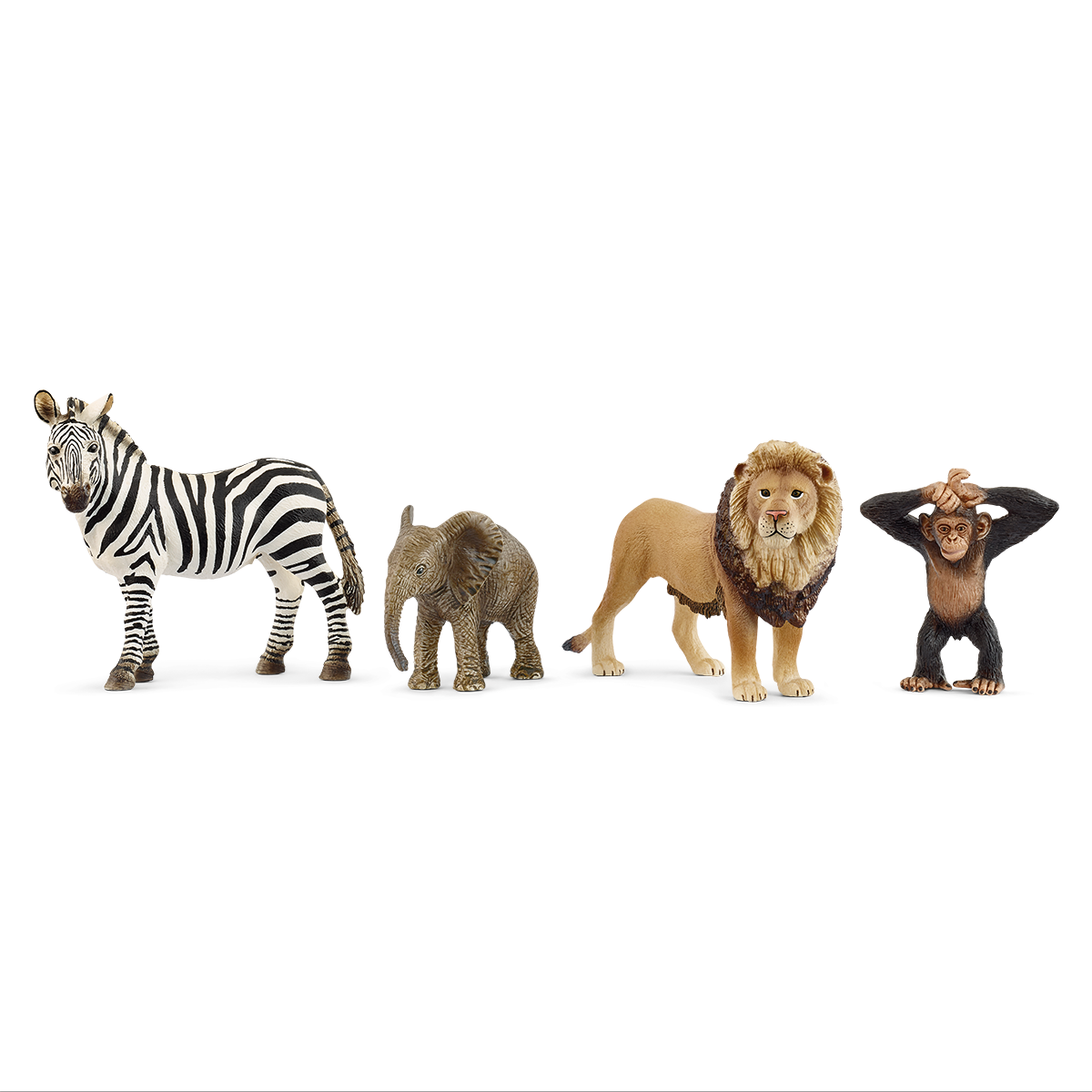
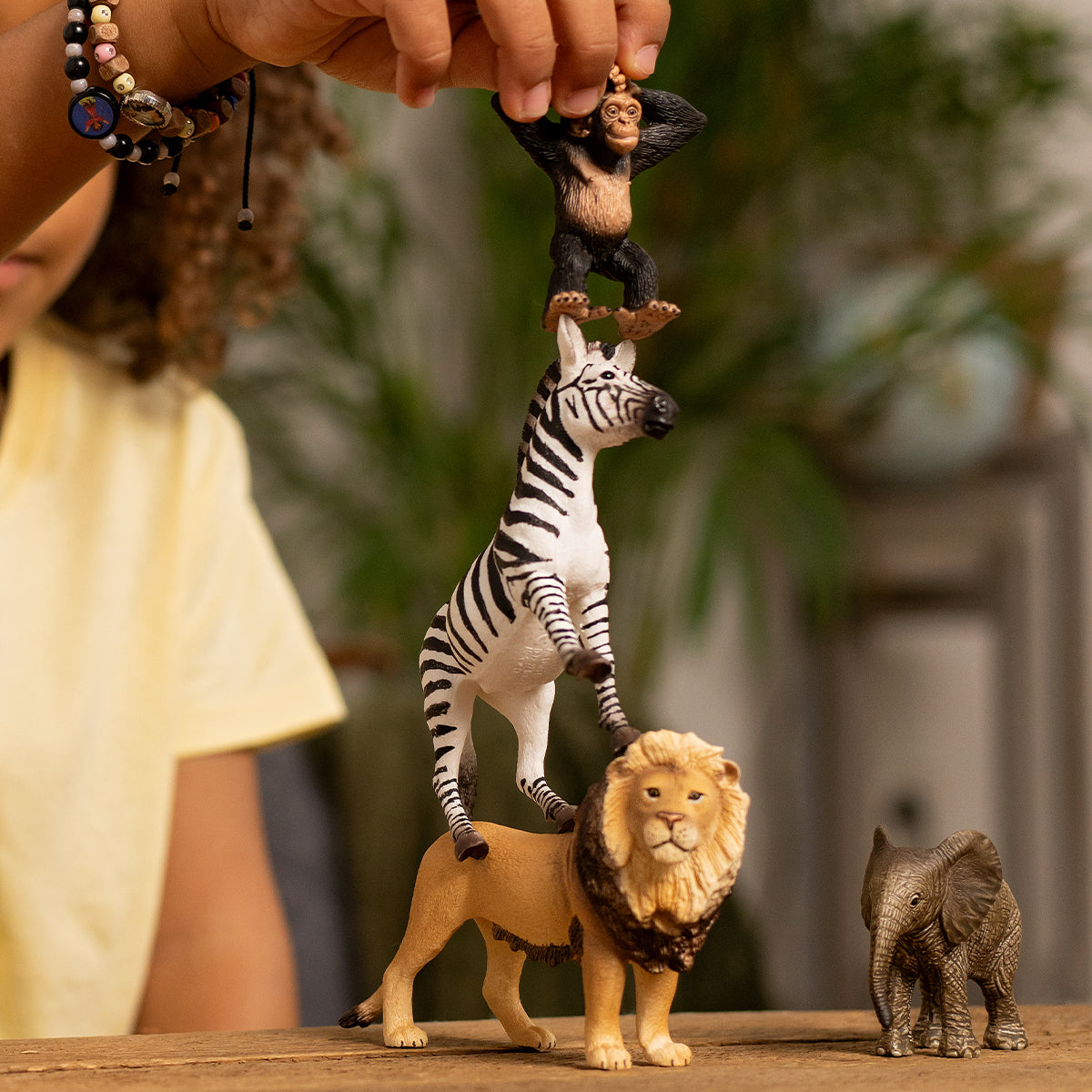
In five minutes, you and your little one become “animal detectives,” spotting special body features that help animals live where they live. It’s quick, cozy, and full of “ooh, look at that!” moments—no pressure, just play.
✅ What You’ll Need
- A few SCHLEICH® animal figures from various habitats or locations around the world, such as African wildlife figures or an assortment of aquatic animals.
- 3 “habitat” items: a towel/blanket (forest), a sheet of paper (snow), and a pillow or brown cloth (desert) — or anything you have
- Optional: a magnifying glass (real or pretend) or a spoon as a “detective tool”
⏱️ 5‑Minute Play Idea

1) Make 3 tiny “habitat spots” (1 minute).
On the floor or table, place: paper = “snow,” towel = “forest,” pillow/brown cloth = “desert.” Add your SCHLEICH® animals nearby and whisper: “Detectives, we have a case! Where does each animal feel best?”
2) Pick a detective, spot a “special feature” (2–3 minutes).
Choose one animal. Hold up your “magnifier” and say: “I spy something special!” Then invite your child to point to a body part and name it in simple words: “Fuzzy fur!” “Big feet!” “Long neck!” “Spots!” “Big ears!”
Now try placing the animal in a habitat spot and do a quick pretend story: “Brrr—does this animal look cozy in snow?” “Is the long neck helpful for reaching leaves?” “Do big ears help hear or stay cool?” (No right answers—just noticing.)
3) Wrap the case (1 minute).
Finish with: “Detective report!” Ask your child to choose one favorite clue: “This animal’s special feature is ___.” Then let the animal “thank” the detective: “You noticed my ___! That helps me!”
If your child wants more: swap animals quickly—one clue each—like speedy detective rounds.
🎯 Adaptations to suit your child
Optional (ages 3–5): Pick just one habitat (like “snow”) and play “cozy or not cozy?” by moving different animals in and out and making silly sound effects.
Optional (ages 6–8): Add a gentle “because” story: “I think this animal likes the desert because ___,” or invent a “new habitat” (like rainy jungle) and choose which features might help there.
🌱 What Your Child Is Learning

- Animals have body features that help them stay safe, find food, and feel comfortable in different places.
- Noticing details (like fur, feet, ears, or necks) builds observation skills—through playful talk and pretend.
💡 Quick Parent Tip

Keep it light: you don’t need “correct” answers or explanations. If your child says, “The farm animals would go ice skating in the snow,” celebrate it—then gently add curiosity: “Ooh! What part of the goat would keep it warm?” Let your child lead the story, and you follow their wonder.
❤️ Learn More About Science and STEM Play Ideas
Explore more ways play supports learning science through play.